JellyPages.com

Saturday, October 29, 2011

To Die For

Sandra Byrd did an excellent job in writing to Die For. This book follows Anne Boleyn and her childhood friend Meg Wyatt in Hever. They are good friends and Meg's brother Thomas has a crush on Anne and writes poems for her. Anne is sent to the French court to serve Queen Claude with her sister Mary and she is gone many years. Meg is often at her home with her two brothers, abusive father and very sick mother. Whenever there is a courtly gathering Anne is sent home and Meg is excited to see her and catch up. Anne has become even more lovely and poised, sophisticated. Meg notices how men just watch her. Her sister Mary is to marry Will Carey; the King of England attends and Meg notices he dances often with the new bride. She wonders how long it will be before he makes her his mistress. As Meg and Anne visit, she discovers that Anne has been reading scriptures and seems to be interpreting them for herself. Meg herself isn't very religious and finds it kind of strange coming from her childhood friend.

Meg has a crush on Will Ogilvy, a nearby neighbor, but he tells her since he is the second son that he will be entering the priesthood. Meg is very disappointed as she had hoped they would marry one day. Anne is soon sent to serve in the English court as her sister Mary is the King's mistress and has had a child by him. Meg begs to go with and Anne's father writes a letter to hers and he allows her to go. Her marriage is being arranged to a Lord Blackston, an elderly rich childless man, but betrothals could take much time to come to pass. Anne's own betrothal had been years in the making and nothing had occured. Meg thought it was because the family was so busy at court and tied up in Mary's affair with the King. While at Court, Meg came to learn that Queen Katherine and King Henry were not on good terms and had not been for some time. The King was often flirting with this woman or that, and seemed larger than life. Soon the sweat breaks out and they disperse to various places to avoid it. Anne catches it and Meg helps nurse her. Mary's husband Will Carey died of it, and alone with her two children by the King but not acknowledged, she is no longer in favor. Anne doesn't seem to care as they don't seem very close.


Soon they return to Court, after Meg has been formally betrothed to Lord Blackston. His heir Simon attends the ceremony on his behalf as he is quite ill. He said she would be sent for when he was better. A married woman, but not really, Meg returns to court. She notices that the King is paying Anne attention and singling her out. Soon it becomes a full out courting that is obvious to all at court. Anne tells Meg that the King believes his marriage to be null and void in the eyes of God, because he had married his brother's widow. He quotes scriptures for her telling her that it is a sin and why they have had no male issue. The King seems to have found a match in Anne, and her wit matches his in Gospel discussions. Anne is for the reform and soon is lending her books to the King to read. Meg stands by Anne through the many years as the King courts her, never beds her, as he seeks to find a way to wed her. Meg is there when finally, after several years, they are able to marry. When the King finds that Anne is pregnant, they marry again more publicly so if the child is a boy his legitimacy would not be questioned.


Meg often attends the private and secret Lutheran meetings at court to spy for Anne. She meets up again with Will her childhood crush, and he is indeed a priest now. He gives her his banned English Tyndale bible, and Meg finds herself becoming immersed in them. Soon the long awaited for babe is arrived, but it is a girl. The King is quite beside himself, after all the work he did and turned over the country's religion to put aside his former wife. Anne tries to become well again and quickly, so they can soon have another child, a boy. Meg is sent for by her husband, only for him to tell her he is dying and will leave her a proper income. Even though they had never consummated the marriage he said he would provide for her. Meg returns to court as a dowager baroness, content that she is free while being able to provide for herself. As the years pass, Meg continues to serve Anne faithfully even during her two miscarriages. Both babies were boys.


Will comes to Court to warn Meg that he has heard that Thomas Cromwell along with others is working to find a way for the King to free himself from Anne. He warns her to watch the Queen and keep her safe. Anne is beside herself and still not fully recovered from her last miscarriage. During this time Queen Katherine had passed away, leaving her daughter Mary alone and forgotten in the household of the Princess Elizabeth, her half sister. Meg had noticed that Anne had changed with the years of being married to the King; she often railed at him when she should have just kept quiet, and had become more haughty with those serving her. Soon word spread that Anne was to be taken to the Tower because of witchcraft. Meg was not able to go with her, but soon more charges followed. She was accused of incest with her brother George and affairs with other men. Meg did all she could to help Anne, and eventually was able to be with her in the Tower. She had saved and put aside some of her prised treasures to one day give to her daughter Elizabeth. The King had annulled their marriage, making Elizabeth a bastard.


It seemed he was again on the prowl for a fertile wife. Meg stayed with Anne through her last month of life, encouraging her and praying with her. At her trial, she was composed and denied all charges. They were ridiculous as most the times and places they cited her having these affairs were at the wrong places or times; some she was still pregnant or recovering from childbirth. Meg thought they were ridiculous and would be put aside, but they weren't. The men Anne was accused with were all put to death. Her brother George was beheaded just a day or so before Anne. A French swordsman had been sent for, because the King knew Anne loved the French ways, and because it was told it would be swifter and not painful. Anne's closing speech was eloquent and sweet. She died a Queen that day, regal and composed. Meg and the other ladies in waiting had to take her body and head and bury it themselves. The King married Jane Seymour not long after Anne's death.


Meg left Court, disconsolate and very alone. She was in her late thirties now, unwed with no children and no dowry. Her mother and father had passed away, leaving her second brother in charge. As he was cruel to her she didn't expect much from him. Thomas came for her instead; he had been imprisoned in the Tower as well but was released. He took her to Will, who had been released from his vows. His eldest brother had died, leaving him heir. They married quickly despite her having no dowry, and without his father's approval. She still had Anne's favorite string of pearls with her and her locket ring to give to Elizabeth one day. Anne had said to Meg before her death, "But if you ever have occasion, do not be reluctant to commend me to His Grace and tell him that he hath ever been constant in his career of advancing me; from private gentlewoman he made me marquess, from marquess a queen, and now that he hath no higher degree of honor he gives my innocence the crown of martyrdom."


Anne still is a highly written about and talked about woman of history. She is often reviled because she was a big cause of the King's divorce to his first wife Queen Katherine- she also was a huge part of the reformed church in England. I liked this book because it showed a different side to her than I've read about in The Other Boleyn Girl or other books. This author showed through her friend Meg, that she followed the King because of his passionate belief that his first marriage was invalid. She so wanted to give the King a son, but was not able to. She is often loved as well as hated. I liked this book because I actually felt compassion for her. I did skip over the slow years of the King's workings to divorce Katherine to marry Anne. It is her abrupt downfall that is more compelling and sad. Meg and Anne were childhood friends, although I'm not sure how often she attended her at Court. I will always be fascinated by Anne and her life, as well as that of the King's. By the end of Henry's reign, there were English Bibles in every church in England. For those that have read about Anne Boleyn and her life- what do you think of her? I certainly believe she was ambitious for that is how she was raised, but I think she did believe in the King's cause and when they were finally married, she found it wasn't as desirable or happy as she thought it would be. The stakes were much higher, and she fell.

Tuesday, October 25, 2011

The Favored Queen

The Favored Queen by Carolly Erickson was good, I finished it in just a few hours. This book is about King Henry VIII's third wife, Jane Seymour. I found it interesting because I don't think I've read a book before that was just from her point of view. Of course it is historical fiction, but it showed a new side to her I found interesting. The way the author chose to portray her is pretty close to what I had pictured her. Some have said she was also ruthless and ambitious, but I side with the author's point of view. Jane was not particularly pretty, and she kept getting older and older with no match coming her way. She served at court to Queen Katherine, and was around to see her slow downfall to be replaced by ruthless Anne Boleyn.

Jane was sweet and kind, and kept her thoughts to herself. She did what was asked, and rebelled quietly in other ways. She also had an ambitious brother Ned who served at court in various capacities as well. Her father was lecherous and several times because of his liaisons, she was unable to marry into that particular family. Since she was so sweet and obedient, she was probably easily forgotten and so a marriage match was never made for her. As the years went by and she got older, she did take a lover at court. I can't imagine anyone staying innocent at court for too long, especially since she was almost 30 by then. The book showed her sympathy for Queen Katherine as she became the princess dowager, shunned from court and rudely and poorly housed, separate from her daughter Mary. She saw the supporters at court change from Katherine to Anne, and saw how fickle friends could be. She witnessed the downfall of Thomas Wolsey and the rise of Cromwell.


As Anne became Queen and produced a daughter and not the longed for male, her star was soon on the downfall as well. Jane lived through the sweating sickness and saw much change around her. King Henry became larger and more angry and prone to mood swings. They had to have been familiar with each other as she had served at court for many years by then. As Anne had two stillbirth children, one that was deformed, Jane knew that King was fishing for a new wife. Soon the attentions of the King were upon her, and she was nervous about her future. I imagine with her brother's ambitious prodding, along with her unmarried state and wanting children of her own, that she eventually became Queen. I don't believe she planned it, I think it just happened. The King was looking for a fertile lady with a good reputation, and probably someone as far from Anne as possible. Where Anne was dark, Jane was light; where Anne was quarrelsome Jane was meek and humble.


The King housed Jane away from court in a manor as Anne's trial and eventually her beheading took place. He wanted her away from it all, to keep the taint from their soon to be marriage. They were married just days later, and soon it was all about whether she was pregnant or not. Several months later she was finally pregnant, and the King was very pleased. Shortly after the long and arduous labor, Jane started to get weaker and weaker. Some say she was neglected and not well taken care of. Since she had produced the King a son, mayhap people soon forgot about her in their joy for an heir to the throne. She passed away alone it was said, without the King because he so feared sickness. While I have always viewed Jane as one of the sadder queens, because of her short life, some movies have portrayed her as the great love of Henry's life. I'm sure in his later years he venerated her because she had given him the one male heir. I believe Henry also had him buried next to her out of all his six wives. As he was a fickle and changeable man, I don't believe they truly had a happy and loving marriage. I think this book was interesting to see into Jane's world, albeit fictional in ways. I always love to get to know more people in the Tudor period from all angles.

Monday, October 24, 2011

Queen Hereafter

Susan Fraser King wrote Queen Hereafter and I thought it was pretty good. It was an easy read, but I did find myself not really enjoying the main character. The book follows Margaret and her family as they are shipwrecked on the Scottisch coast. Her brother Edgar has been outlawed from England, when he should be King. Forced to leave the convent that Margaret and her sister were staying in, they travel overseas to seek refuge with the warrior-king Malcolm Canmore. In return for helping the Saxons return Edgar to England and his throne, he asks for Margaret's hand in marriage. While living among the barbarous Scots, Margaret and her mother and sister try to feel at home. Many of their things were lost or left behind during the voyage.

They soon notice that the manners of the court is very different in Scotland, and their king is rough and fierce. As time passes, Margaret is wed to Malcolm and the people are hesitant to rejoice a Saxon being put on the throne. Amidst the turmoils of the Scotland people being divided, and England's king coming to invade, Margaret finds that she is quite content to be queen. She instantly sets about redoing the castle as well as the way of meals and courtly manners. Her presence seems to calm Malcolm and he becomes less wild and more courtly in his manners. Margaret had desired a life as a nun, but instead finds her vocation in being queen. She is very pious and prays at all hours of the day, fasts constantly and eats little, and works hard to put the castle to rights. The tale is a little like Beauty and the Beast, where the pretty woman tames the beast and makes him handsome.


They have two boys rather quickly, but Margaret's pace does not falter. A Celtic bard is brought to court, named Eva, and she is brought as a hostage as well as to play for the court. The Lady Macbeth still rules in the north and they do not answer to King Malcolm. He keeps her as hostage the lady's good behavior; while her talents are known far and wide she becomes popular with her beautiful music. Margaret forms a bond with her and they are often together. The court eventually travels to Dun Edin, so that the King can show off his Queen as well as see to his kingdom. While there, Margaret sets again about redoing the palace and helping the people. She constantly gives alms to the poor, as well as food, and soon has many starving children sent to be fed in the palace. She even sits down and feeds many of them herself, from her own china and gold silverware. Many balk at her closeness to the people, but she is happy doing all she can to help the poor and hungry.


Many start calling her Saint Margaret for her good works and charitable donations. While on travels, she gives away of her own clothing and shoes for the poor, and demands her ladies do the same. Whenever she can, she helps give all she can. The King acquiesces and seems happy to allow her to do what she wills. The people are happy with their rulers for their generosity and goodness. Margaret tries to go on a pilgrimage, but is once again pregnant and is forced to ride on a horse or go by ship part of the way. Many cannot afford the fee to pass across by ship, so she changes it so anyone can pass through free of charge. She also has a church built in her name, and donates generously to the many churches and convents nearby. Soon word reaches them that William has entered Scotland with hundreds of warriors.


They meet in Dunfermline to meet William and his troops, and Malcolm is ready to enter a peace treaty with him. The terms of the treaty demand a hostage, and in place of their firstborn son, William says he instead ask that Edgar leave and never return. He also demands that her mother leave Scotland, and her sister to enter a convent as planned. Margaret is sad at them leaving, since she will no longer have her family around her. As things settle down over the Saxon rebellions, Margaret goes with Eva on a riding trip before returning home. Eva had secretly been a spy for the Lady Macbeth, sending her letters of the goings on at court. Margaret finds out her duplicity when she sees her secretly meeting with the Lady Macbeth, and the king's guardsmen fire arrows on her guardsmen. Eva is imprisoned for treason, as she was a hostage and not supposed to communicate with her home. Margaret implores for the king to release her, and he eventually does. Eva decides to stay and play for the court, as she has enjoyed living there with Queen Margaret.


Although Eva is a fictional character, the Lady Macbeth is not. Queen Margaret was known as a saint for her many good deeds. She had over 8 children, all who survived adulthood which was very rare. She was also a complex woman, drives by an obsession to pray constantly and fast. She died in her mid-forties after the deaths of her husband Malcolm and their son Edward. Some say she died of a frail heart from habitual fasting and anorexia. The author based this story on Margaret's good deeds in her early life, as well as the mystery of Lady Macbeth and queen Gruadh. Tiny lights, it is claimed, still float around her tomb in Dunfermline, proving that she still watches over Scotland this day. Traces of their blood continue to this day in British royalty.

Thursday, October 13, 2011

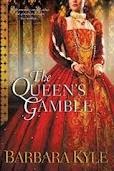
The Queen's Gamble

Barbara Kyle is a great author, and this is the 4th in a series that can be read as stand alone books. The Queen's Gamble is during the second year of young Queen Elizabeth I's reign- troops have landed in Scotland and are preparing to invade England along with the French and Spain. She is being put to the test already, and many say she won't last long. Isabel Thornleigh, daughter of Honor who has been written about in the previous books, travels to England with her husband Carlos and their son Nicolas for a visit. Last Isabel had heard is that her mother was in prison and on trial for treason. She hoped with her gold that she could buy her mother's freedom. Upon arriving there, they are met and greeted by her brother Adam's wife, Frances Grenville. The Grenvilles had long been an enemy of the family, and it was because of them her mother had been tortured and was now in prison.

Isabel was surprised to see she had married her brother and was also heavily pregnant; as Frances rushed them to her parents' home she tried to tell her a little of what had been going on. Since the trip had taken a few months, a lot had happened in that time. Queen Mary had passed away, and upon Queen Elizabeth's coronation she had rewarded Isabel's mother Honor and released her from prison. Her mother was now a close friend and confidante of the new queen's, for her help she had given the Protestant cause. Isabel was overwhelmed and relieved to find her mother healthy, alive and also quite wealthy. Her father had also been knighted; the honors bestowed upon their family by this new Queen were quite impressive. During their visit, Isabel soon senses the tension in the city and discontent. She is attacked and barely saved on an outing, because someone sees her cross that she is wearing. She had spent the last 5 years in Trujillo living with her husband and son, and they had converted to the Catholic faith. Many in England were leery and violent towards those that were still Catholic. Queen Elizabeth had declared England to be a Protestant country, but of course there were always secret Catholics still practicing and worshipping in secret.


Isabel doesn't see her mother much as she is often at Court in attendance upon the Queen. They soon learn that an invasion is under way any day now, and soon Carlos is called by de Quadra, the Spanish king's envoy, to help serve the French in their military campaign against England. He feels forced to go, because their livelihood and income depend upon the goodwill of the French and Spanish. Carlos was Spanish and had grown up with no good bloodlines, and so had crawled and worked his way to where he was now- quite wealthy and respected in the New World. As he leaves, Isabel stays behind with her mother and tries talking her parents into leaving and going home with her. Matters quickly grow serious when Isabel is called upon to meet the Queen, and is asked about where her loyalties lie. She declares herself a true subject of England, and soon the queen is sending her on a mission to take gold to her troops in Scotland. The Queen keeps her son as insurance, basically a hostage until she returns.


Husband and wife are on two opposing sides, and Isabel travels for weeks to Scotland and delivers the gold. While there, she witnesses an attack and many are killed or wounded. England's small army is seriously depleted and in danger; Isabel decides to help by visiting her husband where he is stationed nearby, to spy on the enemy. Her mission is dangerous as she could be caught at any moment, and she could put her husband in danger as well. Carlos discovers what she is about and sends her away in extreme anger; as military advisor to the French he can't be seen to have an unloyal wife. Isabel leaves and ends up staying with the Grenvilles for a time, where her sister in law Frances is staying with her new baby. While there, she is privy to secret conversations and whisperings going about. The Grenvilles are plotting treason, to attack and kill Queen Elizabeth and put the Scots queen on the throne. Isabel again pretends interest and to be on their side, which is plausible because her husband is working for their side and she has been in Spain the last 5 years. When Christopher the brother discovers her snooping through his papers, he tries to kill her.


Isabel is barely saved in time by her husband who has come to make up with her- he had helped prisoners escape and so now had to flee himself. They travel back to London where they hope to warn the Queen about the plot to assassinate her. Carlos goes to talk to the French ambassador to explain his actions, and hoping to keep their home and incomes. Isabel goes ahead and waits to speak with the Queen; word had already reached them of the plot, and they arrest her on suspicion of treason. Because of her spying and pretending to be on the other side, she had actually incriminated herself accidentally. While her parents and husband strive to break her free from the Tower, she prepares herself to die. She is to hang the next day with several others; she is also pregnant. Her mother pleads with the Queen to grant her an audience, which she agrees to only because her mother's loyalty. Isabel pleads guilty so as to save her family, she did not want to risk their lives also.


Through some exciting events Isabel is pardoned and set free. Carlos and Isabel decide to stay in England as they had lost their home and incomes back in Spain because of Carlos's switch to the English side. They are granted manors and incomes in England from the Queen, as thanks for saving her life. While I have left out many details, it does seem the book is left open to another one in the series. Christopher Grenville, thought to be dead from the skirmish, may be still alive. I have read the other books in the series and it does help to understand the characters if you have read the others. I liked this book because it was exciting, dangerous and courageous. As always there are sexual scenes to avoid, but that is basically it. I am still fascinated by Queen Elizabeth and her many dimensions. Thought to not survive a second year of reign, she went on to reign for over 40 years and it was called The Golden Age. The Queen of Scotland passed away, leaving her young daughter Mary in her stead. Mary of Scots and Queen Elizabeth, cousins, were to have an 18 year long feud.

Sunday, October 9, 2011

The Queen's Daughter/ All the Queen's Players


I realize that I haven't blogged a couple books that I've read. Thanks to a recent post from an anonymous new friend, I feel more encouraged to keep writing my posts. Most of my life has actually been spent reading every genre but historical fiction; it's just been the last 2-3 years that I've almost exclusively read them. I apologize there is no variety, but this is what I love. The Queen's Daughter by Susan Coventry was pretty good, it was a quick and easy read. The book is about Joan, the youngest daughter of Eleanor of Aquitaine and King Henry II of England. She has 4 older brothers that are quite older than her, but Richard dotes on her more than the others. Growing up at Court she is in between her parents, who are usually fighting and eventually her mother is banished and basically imprisoned. Her father keeps her with him for some time, basically as a hostage, and then sends her to her mother for a time.


King Henry, her father, is always in some fight or another with her brothers Henry and Richard. They are of age to gain some kingdoms and land, but still childish and young. They constantly wrestle and war with their own father to get what they want. Eleanor often comes to the aid of her children, which is why she was banished so she couldn't meddle anymore. Joan is married off at a young age to the king of Sicily, and she basically lives like a child for more years until the queen mother forces them to finally consummate the marriage. Her husband William was often sick, distant and much older than her so he treated her indifferently. Despite many years of marriage they had no children. He died of a long illness and she was taken captive immediately after his death by Tancred of Lecce who had usurped the throne. Her brother Richard finally comes to her aid almost a year later, and she sets sail with him to Catania and Saladin. Joan basically becomes her brother's right hand, and assists him in all things. He marries Berangeria, and Joan is often keeping her company as her brother is busy and not very interested in his wife.


Joan reunites with her mother, who is now quite old, and it has been many years. Joan has become wise in the politics of life and court, and aids her brother, even when she disagrees with him. During her time in Sicily, her brother Henry had passed away and then her father. Richard was now King with her brother John as heir, and her mother ordered her to be by his side. He seems different and is often commanding and cruel to Joan, and tries to marry her off a few times. In Richard's attempts to win Jerusalem, Joan disagrees with some things he does and is banished for a time. Joan comes into contact again with Count Raymond, a childhood friend and crush. He proposes marriage to her and they live happily enough together. Upon the birth of their second child, Joan dies in her thirties. Not much was written or remains from her life, other than the fact she had 2 husbands and died after the 2nd birth. I found the story interesting because Joan's powerful and well known parents, and the bloody feud between brothers and father. I'm sure Joan had to be an intriguing person considering especially who her mother was.

All The Queen's Players by Jane Feather follows Rosamund Walsingham, cousin to Cecil Walsingham the queen's secretary. Her mother had passed away after many years of illness, and she was the youngest child and left with just basically her brother Thomas. Her brother works for their cousin Cecil, and soon brings Rosamund to court to meet him and the queen. She becomes a junior lady of the Queen's, and soon discovers that court life can be quite dull. She makes some friends that try to ruin her reputation, but don't succeed. Will Creighton is who she falls in love with; she had met him once at a play and found him intriguing. Rosamund worked for Cecil and was told to draw everything she saw, and the Queen also desired her to draw things for her as well. She was quite gifted, but her skills weren't used for long. She is discovered missing when she was supposedly sick, and is banished from court. Queen Elizabeth likes her ladies to be circumspect and clean, and when they are found not to be, she sends them away in disgrace or even sometimes imprisonment.

Rosamund goes to stay with Cecil and his wife for a time, and then he decides to send her to serve Mary Queen of Scots, who had been imprisoned in various stages in England for nigh on 18 years. She had been stripped of her titles and even her royal chair and hangings, but still she proudly tried to persevere. Cecil commanded her to draw or write to him everything she saw or heard, and she was sent to her as a pretend Catholic. As Rosamund serves Mary, she grows to appreciate and admire her strength and courage. Although herself mostly Protestant, she admires the courage and faith that Mary has. Cecil works tirelessly to bring the Scots queen down, and eventually finds letters of plots to rescue her and put her on the England queen's throne. Cousins, Queen Elizabeth has a hard time actually accusing a fellow sovereign and woman to death. All those involved in the plot are put to death, and Rosamund is forced to watch. Eventually, the courts try Mary for treason and she is found guilty. She is beheaded with an axe, and Rosamund is there to witness the scene for Cecil.

After her service, Cecil allows her to be free and she goes home for a time. Will comes to visit her there to continue their assignation, but is suddenly killed in a sword duel when an old nemesis from court comes to fight him. Forced to mourn his death in secret, so no one would know who her lover had been, she is soon married off to Sir Roger Askew, a widower and rich man. They live quite happily and have children together. I admit, this wasn't my favorite book. I left out some details of the plays of the time, as that was in the book quite a bit. Rosamund's brother had a friend Kit Marlowe, who was a marvelous and brilliant playwright of the time. He met an early and unfortunate end, and the author sets the basis of the book during that time because she wonders what a brilliant mind like his could have done had he lived longer. I didn't care for Kit in the book, because the author made him homosexual and included far too many details in the book of it. It was far too explicit for my taste, and not necessary to the plot. I wouldn't recommend the book simply because of the sexual scenes in the book.

Sunday, September 25, 2011

The Heretic's Wife


I know, a pretty intense title huh? The Heretic's Wife was actually quite good, although full of what you could expect- burnings and religious strife. The book is set during the time of Henry VIII and his desire to divorce Queen Katherine to marry Anne Boleyn. During this treacherous time, an English Bible is being translated and distributed by William Tyndale. Many who work for the Protestant Reformation cause, end up imprisoned or worse. Many booksellers or printers are either put out of business or imprisoned or even killed. It follows Kate Gough, a book and print shop owner, who works with her brother. John ends up being arrested and imprisoned for some time, because he has sold banned or heretical works, but Kate manages to find him and pay for his safety.


During this tumultuous time, many working for the King such as Thomas More are very opposed to the Protestant cause, and is working very hard to stop them. Thomas More was a deeply religious man, a very conflicted and complicated one too. With his chancellor's seal, he uses every means possible to get his prisoners to recant or he has them burned. He is zealous in his efforts, and his greatest prize would be to capture William Tyndale. As you follow his story, it also follows the King and his courting of Anne Boleyn. During this book, you mainly follow Kate Gough. Upon her brother's release from prison, he is not the same and decides to leave for the country with his wife and child. Kate stays behind in England and tries to keep the print shop open, but fails. She decides to take up the work her brother left behind, and dresses as a boy to meet a shipment of smuggled English books. On her journeys, she meets a John Frith who has escaped prison and certain death. He works with William Tyndale, and despite his recent arrest, is still working for the Protestant cause.


While on her travels, she has to reveal she is a woman and while staying with a nice family, she tends for John Frith as he recovers from his sicknesses. While caring for him, they find they like each other and he proposes marriage to her. He is to meet a ship that will take him to Antwerp, and asks her to go along with him. He is basically a fugitive hiding from the law, which is very dangerous, but she agrees and goes with him. Their captain, Tom Lasser, is very kind and treats them well. He often takes smuggled goods and books for the Protestants, even at his own risk. Once in Antwerp, they set up house and John immediately sets to working with William Tyndale and The English Counting house. They meet many friends there of like mind, and spend a few peaceful years there. Kate starts and works with a women English bible group, praying and singing and worshipping together. She has a miscarriage, and starts to get bored with life because John is constantly busy.


Despite a few men out searching for them, they escape arrest and continue their secret and dangerous work. Kate finds out she is pregnant again, and shortly after John decides to leave for England to go preach and such. The King had thrown off the pope and cut off ties from the church to start his own, and so he could marry Anne Boleyn. She was known to be a secret Reformist, so John felt it was safe to enter England again. Thomas Wolsey had fallen from grace and died, and then Thomas More had taken his place. He ended up resigning when he could not agree to the King's new marriage to Anne Boleyn. No one could be arrested without the King's consent, so John felt fairly safe returning. Kate stays behind in Antwerp with William Tyndale, and gets excited as her baby gets bigger inside her. Soon news reaches her that John has been arrested in the Tower. He had written some doctrine down, along with his true name, and he was caught. Thomas Cromwell, the new King's man, was somewhat sympathetic and tried to help him. But again, John was too trusting, and wrote something down on paper that they could use against him. His main sticking point was that the sacrament did not really turn into Christ's blood and flesh.


Even when he was being brought to trial, he was given a chance at escape, but he decided to take the martyr's route. He was burned at Smithfield a few days later. Kate had traveled to England to try and save John, but she was too late. She lost her baby in the process, and stays in England in her old print shop. A lady friend of Captain Tom Lasser's also stays with her, and they befriend a local woman and her daughter. The friend gets very sick and is dying, so the 2 women take in her daughter Madeline and raise her as their own. A few months after John 's death, the Captain that had helped them before, comes to propose marriage to her. She accepts, and they all go to live on his ship which he has renamed Phoenix. I enjoyed the book, because there were several different stories going on at once. Religion has always been a heavily debated and controversial subject, it is so sad to me how many have died for their beliefs. There was some torture in the book and violence, so it's not for the faint of heart. It's hard to do a good review when there is so much going on; John was a good husband but his heart was with the Church first. His decision to be a martyr may seem selfish, but he felt it was right. Although Kate remarried rather quickly, she had already had a friendship/relationship with Tom Lasser so it wasn't quite a surprise.

Friday, September 16, 2011

The Second Duchess


As you can see, I am writing another post because I just devoured this book in a little more than a day. I discovered this book while perusing the aisles at the library, and it popped out to me. Elizabeth Loupas wrote The Second Duchess, and right away I could tell it would be fascinating. In Europe the Duke of Ferrara is ready to take a new bride, so Alfonso d'Este is wed to Barbara of Austria. She is his second wife, and as soon as she lands in Ferrara she hears the whispers of how his first wife died. She is very nervous to be getting married at an older age, 26, and also to be going someplace new. It seems everyone around her is whispering juicy tidbits of gossip in her ears, and it makes her instantly curious to find out more. When she gets to know her new husband, she discovers him to be quite stern, serious and strict. When he sees his sisters whispering to her, he demands to know what they are speaking about.


Even though newly married, Alfonso instantly keeps his grip on his new wife. He has her painted with her hair long and flowing, which only unwed women do, and she discovers while being painted that there is a portrait hidden of the first duchess, Lucrezia. The duke her husband had already warned her not to listen to idle gossip or do anything untoward, but her curiosity gets the better of her and she finds the portrait and looks at it. Alfonso finds her, is very upset and beats her. The duchess is very upset at such treatment, especially after only being married a short amount of time. While recovering and staying away from him, she comes into contact with more courtiers that whisper things to her. The first duchess, Lucrezia, had died while imprisoned at Corpus Domini. Barbara, the duchess, takes just a few of her ladies to pay a visit under the pretense of prayer. While there, she meets the duke's aunt who is the abbess there. She pretends to be sick so she can question the infirmarian, the nun Corsica. She gives her a ruby ring in exchange for information.


Soon the Duke finds out about her questionings and starts to get upset again. While on a hunt, the duchess falls off her horse because her bridle had been cut clean through. Someone had tried to kill her. The duke puts her under house arrest while he tries to find out who would do this. He demands she tell him the truth of her doings before he'll let her go. He had also imprisoned her three Austrian ladies, so she was surrounded by women she did not know or trust. She opens up to him and tells him of her investigations. Instead of divorcing her or sending her away like she thought, he agrees to help her in the investigations, claiming his innocence. As they question more people, especially those at Corpus Domini, they find more clues. His first duchess had been a young girl of 14, lowly born and with no real maturity about her. They were not happy together, and did not spend much time together. Soon word spread of her many affairs, and so the duke imprisoned her in the abbey until further notice.


Soon he found out she was pregnant, and so he intended to keep her there to deliver her child in secret, and then to be sent away. While there, she passed away one night with no signs of having been unhealthy. The duke believed she had committed suicide, but the people thought he had killed her. In order to save face, he had spread the rumors that she had died of ill humors so that she could receive the last rites and be buried properly. Suicide would not have allowed such a burial, and would also have marred the duke's reputation. As Barbara works with her husband the duke to discover the truth, she is at war with herself as to whether she truly believes him innocent of the whole matter. He is prickly most the time and hard to get along with. In private moments, he is more tender but still fierce.


The ending comes quickly, full of excitement, intrigue and danger. I was not expecting the killer to be who it was, so it was exciting. I liked Barbara the duchess, because of her strength and wisdom in standing up to her husband, and striving to find out the truth. Surely their marriage could not have been healthy until the past was overcome. They come to get along better and ultimately have a happy marriage. Barbara and the duke are real historical characters; she comes from the Medici line, and he from the Borgias. She was rumored not to be pretty, but she did have long flowing red hair. The other very interesting part of the book, was that the author inserted some dialogue or thoughts rather, from the deceased first duchess Lucrezia. She is like a ghost in between life and death, sort of like purgatory. She offers her views on each chapter, and gives you tidbits here and there that help fill in the story. It always leaves you wanting more, as a good mystery should.


The book had many interesting and complex characters, and I found it very enjoyable. There were some sexual scenes, but easy enough to see coming and skip. I grew to like the duchess Barbara, but I never did like the duke Alfonso; he was too rough for me. The author took a poem from the 1800's by a Robert Browning titled My Last Duchess. The rumors of his first duchess were true, but in fact they think she died of tuberculosis. He did marry Barbara next and they lived happily together, surprisingly for a forced match. It is interesting how from the poem the author was able to weave a story together. I recommend the book because it is very interesting, a historical mystery that flows smoothly. For ghost lovers out there, it kind of left you with a creepy feeling when the first duchess spoke. A very creative and great way to keep the book flowing.